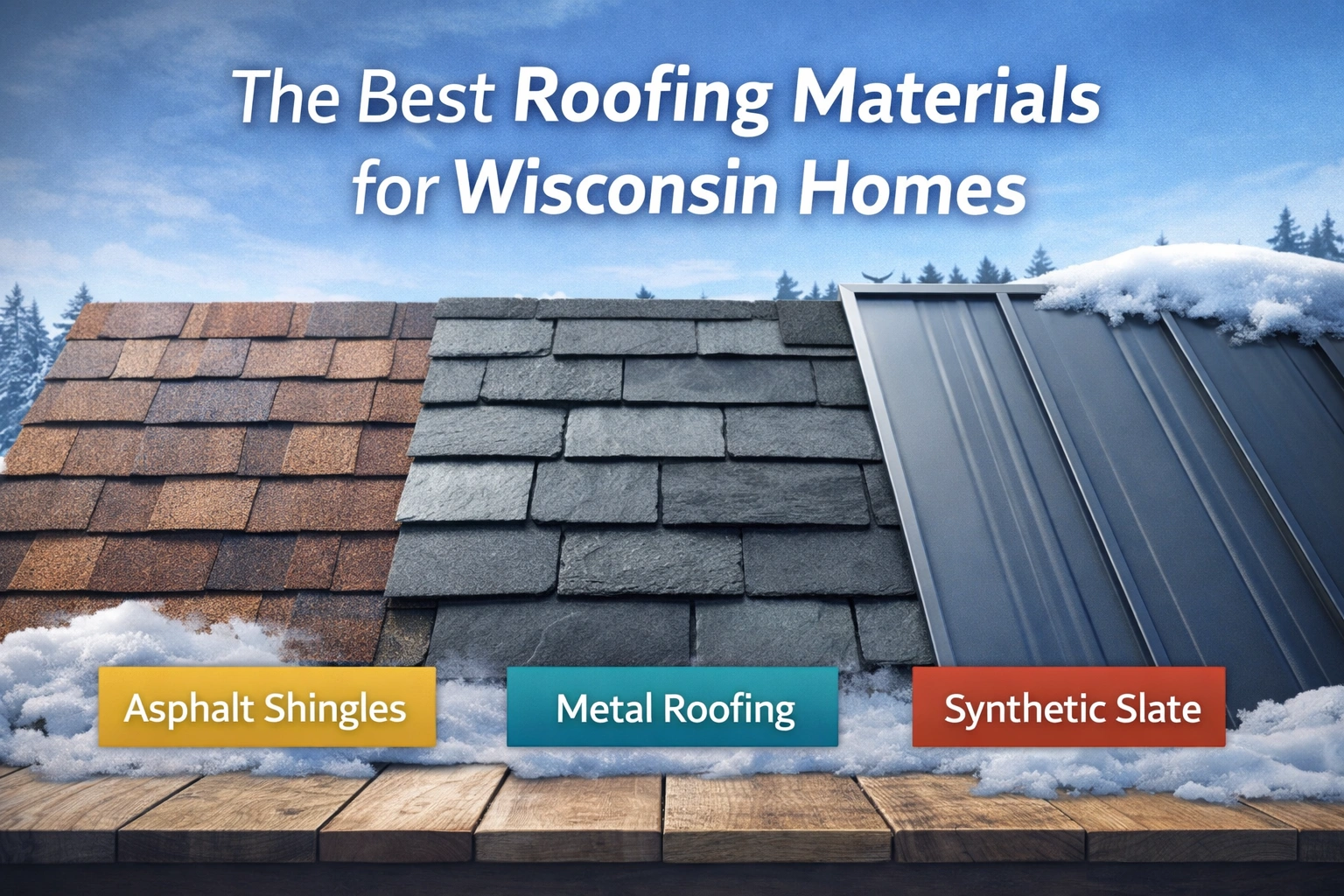
Compare 5 of the Best Roofing Materials for Wisconsin
When it comes to choosing roofing materials in Wisconsin, you’ll want options that stand up to the state’s unique weather conditions. From durable asphalt shingles to energy-efficient metal roofs, there are plenty of friendly choices that provide both protection and style. Consider investing in materials that offer great insulation and longevity, ensuring your home stays cozy and protected for years to come. Happy roofing!
Choosing a roofing material feels like it should be simple — pick the one that looks good and lasts. In Wisconsin, it’s not that easy. The climate here punishes roofs in ways warmer regions don’t: freeze-thaw cycles that work at every seam, ice dams that form whenever ventilation is off, summer hail that strips granules, and UV that degrades shingles faster than a brochure suggests.
What works in Texas or Florida often disappoints in Racine. This guide walks through the five roofing materials you’re actually likely to see on a Racine home, ranks each on the factors that matter here, and gives you a framework for deciding which one fits your situation. If you’re comparing contractor proposals right now, read this first.
How should you think about the “best” roofing material?
“Best” depends on what you’re optimizing for. The material that fits a 35-year-old planning to stay 25 more years is different from the right pick for a landlord with a rental property. The most useful frame is almost always cost per year of service, not sticker price.
A $15,000 architectural asphalt roof that lasts 25 years runs $600 per year. A $40,000 standing seam metal roof lasting 50 years runs $800 per year — but that’s before accounting for the underlayment, drip edge, and flashings you’d replace during a second asphalt installation. Once you factor in total lifetime cost, metal typically pulls ahead for long-term owners and falls behind for shorter horizons.
Beyond cost, five factors matter most in Wisconsin:
- Lifespan under freeze-thaw cycles
- Wind and hail resistance
- Ventilation compatibility (materials handle attic heat differently)
- Snow behavior (metal sheds; asphalt holds)
- Style fit with your home’s architecture and the neighborhood
Roofing materials at a glance
| Material | Typical cost (avg 2,000 sq ft home) | Lifespan in WI | WI climate fit | Maintenance | Best for |
|---|---|---|---|---|---|
| Architectural asphalt | $12,000–$22,000 | 22–30 yrs | ★★★★★ | Low | Most Racine homeowners |
| Three-tab asphalt | $7,500–$12,000 | 15–20 yrs | ★★★☆☆ | Low | Tight budgets, rentals |
| Standing seam metal | $22,000–$45,000 | 40–70 yrs | ★★★★★ | Very low | Long-term owners |
| Ribbed/corrugated metal | $14,000–$25,000 | 30–50 yrs | ★★★★☆ | Very low | Rural, outbuildings |
| Synthetic slate/composite | $25,000–$50,000 | 40–50 yrs | ★★★★☆ | Low | Historic, high-end homes |
Cost ranges reflect typical installed pricing for an average 2,000 square foot Racine home as of April 2026. Your actual cost depends on roof pitch, complexity, decking condition, and material grade.
1. Architectural asphalt shingles
Architectural (sometimes called “dimensional” or “laminated”) asphalt shingles are the most common roofing choice on Racine homes for good reason. They cost roughly 30–40% more than three-tab shingles but last 50–80% longer, carry better wind and impact ratings, and offer a dimensional appearance that looks closer to real wood or slate.
Common brands you’ll see quoted in the Racine area: GAF Timberline HDZ, Owens Corning Duration, and CertainTeed Landmark. All three are solid mid-range products. The more important differentiators are usually the warranty structure (system vs. shingle-only coverage) and the installer’s certification level with the manufacturer — a Master Elite or Platinum Preferred contractor can register extended system warranties that shingle-only installers can’t.
For Wisconsin specifically, look for shingles with a Class H wind rating (up to 130 mph) and — if your insurer offers the discount — a Class 4 impact (IR) rating to hold up against hail.
2. Three-tab asphalt shingles
Three-tab shingles are the flat, uniform-pattern shingles you see on older Racine homes. They’re thinner, lighter, and cheaper than architectural — and they show their age faster. Under Wisconsin’s freeze-thaw and hail conditions, a three-tab roof commonly reaches the end of its useful life at 15–18 years, not the 20–25 you might see quoted in marketing.
The case for three-tab today is narrower than it used to be. As architectural prices have come down, the cost gap has shrunk — a $2,000–$4,000 savings up front often disappears by the time you factor in the shorter lifespan. Where three-tab still makes clear sense: rental properties where cash flow matters more than longevity, and owners planning a sale inside the next 8–10 years.
3. Standing seam metal roofing
Standing seam refers to vertical metal panels joined by raised interlocking seams that run from ridge to eave. It’s the most durable widely-available roofing material on the market, and it performs exceptionally well in Wisconsin’s climate. Snow sheds cleanly off most roof designs before ice dam conditions can develop — a significant advantage over asphalt in this region.
The main drawback is upfront cost. You’re paying roughly double what architectural asphalt runs. On a typical 20-year analysis, metal still costs more. Stretch the analysis to 40 years and metal pulls ahead clearly, especially once you factor in that you’ll have replaced an asphalt roof once or twice in that span.
One thing to know: because metal sheds snow in big slides, you’ll usually want snow retention systems installed above doorways, walkways, and driveways. Factor those into the quote.
Not sure which material fits your home?
We offer free, no-pressure in-person assessments. Rich walks the roof himself and gives you straight information to help you decide.
Call (262) 822-1231 Request a Free Estimate4. Ribbed (corrugated) metal panels
Ribbed metal (often called “ag panel” or “R-panel”) is the exposed-fastener cousin of standing seam. Panels are screwed directly through the surface into the decking, which makes installation faster and less expensive, but leaves small rubber washers that can degrade over 20–30 years and occasionally need re-tightening.
It’s a common choice on rural Racine County properties and outbuildings, and increasingly on modern-farmhouse style homes where the look is intentional. On a conventional suburban home, ribbed metal can look out of place and sometimes complicates resale — worth checking with a local real estate agent if you’re not sure how it’ll read in your neighborhood.
5. Synthetic slate and composite shingles
Synthetic slate — sold under brand names like DaVinci, Brava, and Inspire — is a polymer composite molded to look like natural slate or cedar shake. It’s a fraction of the weight of real slate (which matters structurally), costs less than half as much, and lasts 40–50 years in Wisconsin’s climate.
It’s not a universal upgrade. On a 1980s ranch or a suburban colonial, synthetic slate often looks like what it is — an expensive material in the wrong context. On a Tudor, a Victorian, or a historic Craftsman, it can transform a home’s curb appeal and add real resale value. Bring a sample to the house before committing and see how it looks against the siding and trim.
Materials we rarely recommend in Wisconsin
A few materials show up in roofing guides but don’t make much sense in southeastern Wisconsin for most homes:
- Natural slate. Stunning material, 75–100+ year lifespan, and prohibitively expensive ($40,000–$100,000+ for an average home). Heavy enough to require structural engineering review. Freeze-thaw cycles can crack individual tiles over decades, and replacements are harder to source. Works for historic restorations with an unlimited budget; rarely the right call otherwise.
- Cedar shake. Beautiful when new and appealing for certain architectural styles, but Wisconsin’s wet-freeze-wet cycle is tough on wood. Real-world lifespans here are often closer to 20–25 years rather than the 30+ the marketing suggests, maintenance is higher, and fire-rating concerns have pushed most homeowners toward synthetic alternatives.
- Clay or concrete tile. Common in warmer climates, rare in Wisconsin. Freeze-thaw resistance is poor on many tile products, and the weight requires structural reinforcement. Almost never the right answer in Racine.
How should you choose between materials?
Work through four questions in this order:
- How long do you plan to own the home? Under 10 years, three-tab or architectural asphalt. 10–25 years, architectural asphalt is almost always the right answer. 25+ years, metal starts to make financial sense.
- What’s your budget ceiling? Not “what would you ideally spend” but “what’s the number above which this project doesn’t happen.” That sets the materials available to you.
- What does your home’s architecture call for? Modern and contemporary styles handle metal well. Traditional colonials and ranches usually look best with architectural asphalt. Historic homes (Tudor, Victorian, Craftsman) benefit from synthetic slate when budget allows.
- What are your priorities beyond cost? Lowest maintenance? Metal. Best hail resistance? Class 4 IR architectural asphalt or metal. Best resale for a high-end home? Synthetic slate or standing seam metal.
What factors matter most when comparing roofing materials?
Lifespan and cost-per-year
Divide the total installed cost by the expected lifespan to get a per-year number. This is the single most useful apples-to-apples comparison across materials, and it often changes which option looks “cheapest.”
Wind and impact ratings
Look for Class H wind ratings (130 mph) on anything you install in southeastern Wisconsin. For hail, Class 4 impact-resistant shingles often earn insurance discounts that offset most of the upcharge within a few years.
Ventilation compatibility
Every roofing material depends on proper attic ventilation. Without balanced intake and exhaust airflow, the roof overheats in summer and forms ice dams in winter. This matters more than most homeowners realize — a correctly ventilated asphalt roof often outperforms a poorly ventilated metal roof.
Style and neighborhood fit
Drive the neighborhood before deciding. If every home in a 4-block radius has architectural asphalt, a bright standing seam metal roof may look striking — but it can also feel out of place, and on resale that matters.
Warranty structure
Read what each manufacturer warranty actually covers. “Shingle-only” warranties cover defective materials but not the labor to replace them. “System” warranties — available when a manufacturer-certified installer uses a full specified system — often include labor and are the ones worth paying for.
Frequently asked questions
What is the best roofing material for Wisconsin?
For most Wisconsin homes, architectural asphalt shingles are the best overall choice. They handle freeze-thaw cycles and hail well, last 22–30 years, and cost less than metal or synthetic slate. Standing seam metal is the better pick if you plan to own the home 15+ years and want the longest possible lifespan with minimal maintenance. Three-tab asphalt works for tight budgets but wears out noticeably faster in Wisconsin’s climate.
How long does an asphalt shingle roof last in Wisconsin?
Architectural asphalt shingles typically last 22–30 years in Wisconsin when properly installed and ventilated. Three-tab shingles usually last 15–20 years. Wisconsin’s freeze-thaw cycles, ice dams, and summer hail tend to push real-world lifespans toward the lower end of the manufacturer’s rating.
Is metal roofing worth it in Wisconsin?
Metal roofing usually pays off in Wisconsin if you plan to stay in the home 15+ years. It costs roughly double what asphalt does upfront, but lasts 2–3 times longer, sheds snow before ice dams can form on most roof designs, and needs almost no maintenance. For shorter ownership horizons, the higher upfront cost rarely makes financial sense.
What is the cheapest long-lasting roofing material?
Architectural asphalt shingles offer the best balance of affordability and longevity for most Wisconsin homes. At typically $12,000–$22,000 for an average home and a 22–30 year lifespan, they deliver roughly $500–$800 per year of service. No other widely available material matches that value unless you plan to own the home for 30+ years, at which point metal starts pulling ahead.
Does roofing material affect home resale value?
Yes, but less than most homeowners expect. A new roof of any quality material almost always helps a sale because it removes a buyer objection. The material choice matters more at the extremes: a premium metal or synthetic slate roof on a high-end home can support pricing, while a visibly aging three-tab asphalt roof can cost you buyers or trigger inspection concerns. Industry data from the Remodeling Magazine Cost vs. Value Report shows asphalt roof replacements typically recoup 60–70% of their cost at sale in the East North Central region.
What is the most low-maintenance roofing material?
Standing seam metal is the lowest-maintenance option widely available in Wisconsin. Once installed, it typically needs only occasional debris clearing and a visual inspection every few years. Synthetic slate and composite shingles are close behind. Asphalt shingles need more attention — a post-storm inspection is worth doing, and most roofs benefit from minor repairs somewhere along their 20–30 year life.
Are impact-resistant shingles worth the upgrade in Wisconsin?
Class 4 impact-resistant (IR) shingles usually cost 10–20% more than standard architectural shingles, and many Wisconsin home insurance carriers offer premium discounts for IR roofs. In hail-prone areas of southeastern Wisconsin, the insurance savings often offset most of the upcharge within a few years, and the shingles hold up better to the hail we actually get. Ask your insurer for their specific discount before deciding.
Ready to talk about your roof?
Rich has been working on Racine roofs for nearly two decades. Free inspections, honest assessments, no sales pressure — just straight information so you can decide what’s right for your home.
Call (262) 822-1231 Request a Free EstimateThis article is for general informational purposes and reflects Axis Construction & Remodeling’s experience serving the Racine, Wisconsin area. Pricing, timelines, and material specifications vary by project. Nothing in this article should be taken as legal, financial, tax, or insurance advice — for guidance specific to your situation, consult the appropriate licensed professional. For an accurate assessment of your roof, request a free in-person inspection.