
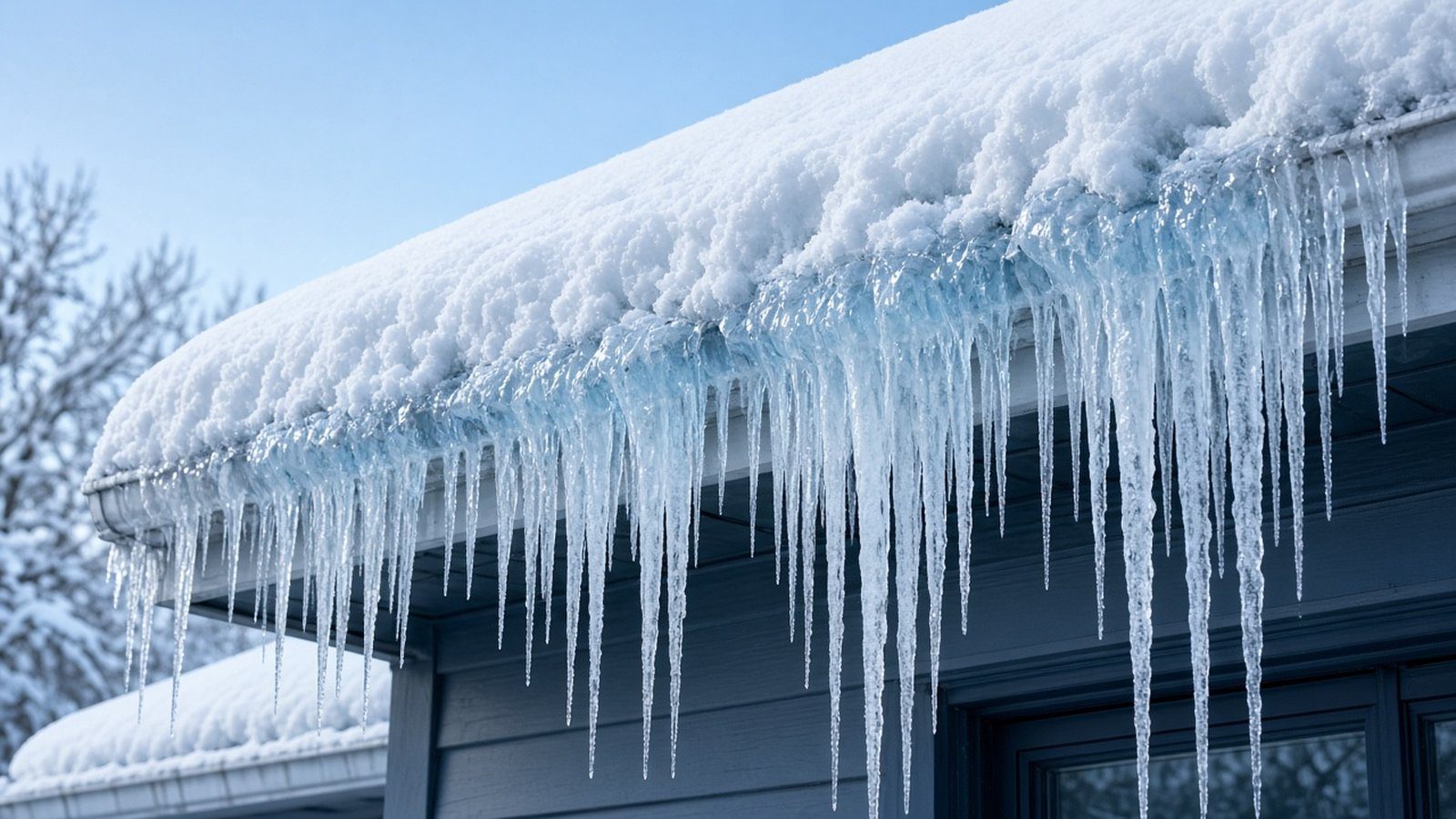
Ice dams form when heat escaping into the attic melts snow on the upper roof, and that water refreezes at the colder eaves. The ridge of ice traps more meltwater, which can back up under shingles and leak inside. Prevention means sealing attic air leaks, adding insulation and keeping roof ventilation working.
If you live near the lake in Racine or Wind Point, you already know winter here can be unpredictable. A thaw, a hard freeze and a fresh lake-effect snowfall can all happen in the same week, and that pattern is exactly what builds ice dams.
Why are ice dams common near Lake Michigan?
Ice dams need three things: snow on the roof, heat reaching the underside of the roof, and cold eaves where water refreezes. Lakeshore communities get plenty of the first. On January 6, 2025, for example, the National Weather Service in Milwaukee documented a lake-effect snow event driven by north-northeast winds, with the strongest convergence over Racine and Kenosha Counties and 2 to 5 inches of snow there (NWS Milwaukee summary, PDF).
Add Racine’s older housing stock, where many attics were insulated decades ago and never updated, and you get a lot of warm roofs sitting under fresh snow.
Illustrative image
How does an ice dam actually cause a leak?
Shingles shed water that runs downhill. They are not built to hold back standing water. When an ice ridge forms at the eave, meltwater pools behind it and can work its way up under the shingle laps. From there it can soak insulation, stain ceilings, and run down inside exterior walls. University of Minnesota Extension notes the main causes are warm air leaking into the attic and inadequate insulation, which warm the roof deck and melt snow from below (UMN Extension).
Illustrative image
How do you prevent ice dams for the long term?
Why should you seal attic air leaks first?
UMN Extension recommends sealing attic air leaks along with adding insulation. In our experience, common leak points include gaps around light fixtures, plumbing and vent pipes, chimneys, attic hatches and top plates of interior walls. Warm, moist air moving through these gaps heats the roof deck.
Where does added insulation help most?
Once leaks are sealed, adding attic insulation slows heat loss through the ceiling. Older Racine homes often have thin or uneven insulation, especially near the eaves where the roof meets the wall.
Why does soffit-to-ridge ventilation matter?
A ventilated attic pulls in cold outside air at the soffits and lets it out near the ridge, which helps keep the roof deck cold. Insulation blocking the soffit vents is a common problem. Baffles keep that air path open.
Our roofing page lists ventilation and insulation as a service. We can look at your attic ventilation and insulation during an inspection.
Should you add ice barrier at the eaves when you reroof?
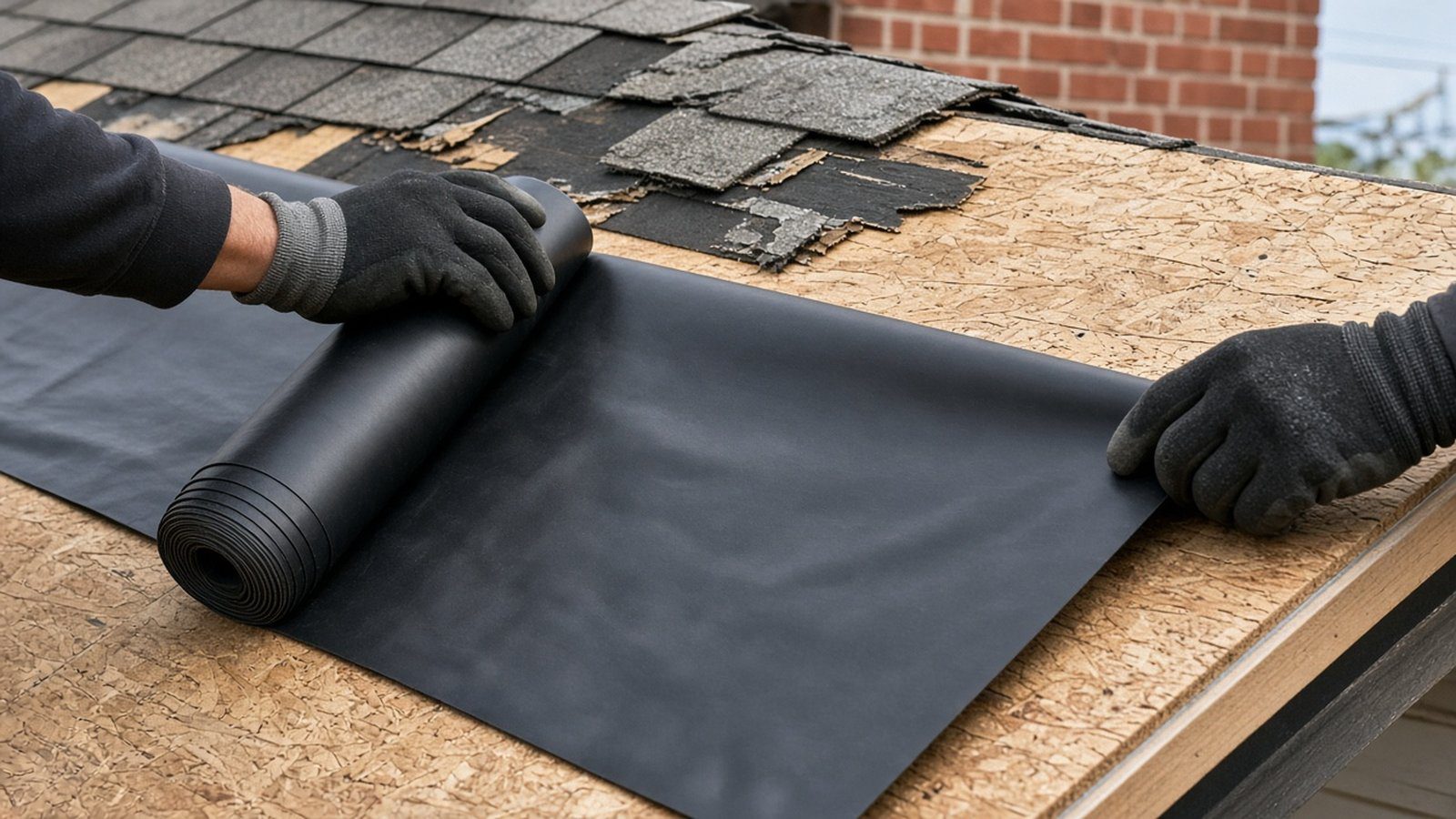
Ice barrier does not stop ice dams from forming, but it is a second line of defense if water backs up. Wisconsin’s dwelling code requires ice dam protection on shingle roofs over heated space with a slope of 4:12 or less, extending at least 30 inches up from the roof edge and at least 12 inches past the inside face of the exterior wall (Wis. Admin. Code SPS 321.28(4)). Shingle manufacturers often call for it on steeper roofs too.
Get Your Free Estimate
Talk with a local Racine-area team that has been working on Southeast Wisconsin homes since 2009. We will look at your project and give you straight answers.
What can you do about an ice dam right now?
If an ice dam is already there:
- Rake snow off the lower roof from the ground with a long-handled roof rake. This removes the snow that feeds the dam. Do not climb on an icy roof.
- Do not chip at the ice with hammers, axes or shovels. That damages shingles.
- Watch inside for stains, drips or wet insulation, especially on exterior walls and ceilings below the eaves.
- Call for help if water is coming in. Our roofing page lists emergency roofing services.
Heat cables can reduce ice at specific trouble spots, but they treat the symptom and use electricity. Fixing the attic is the longer-term answer.
Are ice dams a sign you need a new roof?
Not by themselves. Ice dams are usually an attic problem, not a shingle problem. But repeated ice dam leaks can rot decking and fascia over time. If you have had leaks for several winters, an inspection can show whether the damage is limited or spread out. If you do reroof, it is the right time to correct ventilation and ice barrier coverage. See our post on six seasonal maintenance tips for Wisconsin homes for year-round upkeep ideas.
Had an ice dam leak last winter? Schedule a free roof inspection before the snow piles up, or contact us with questions.
Frequently asked questions
What causes ice dams on a roof?
Heat escaping into the attic warms the roof deck and melts snow on the upper roof. The water runs down to the colder eaves and refreezes. Over time, a ridge of ice builds up and traps more meltwater behind it, which can back up under shingles.
How do I prevent ice dams in Wisconsin?
Seal air leaks into the attic, add insulation where it is thin, and keep ventilation open from the soffits to the ridge. When you reroof, make sure ice barrier is installed along the eaves. Raking snow off the lower roof from the ground also helps during heavy snow.
Is ice and water shield required in Wisconsin?
Wisconsin’s dwelling code requires ice dam protection on shingle roofs over heated space with a slope of 4:12 or less. It must extend at least 30 inches up from the roof edge and at least 12 inches past the inside face of the exterior wall. Manufacturers may require it on steeper roofs.
Should I chip ice dams off my roof?
No. Chipping or hammering ice can break shingles and damage gutters. Use a roof rake from the ground to remove snow from the lower roof, and call a professional if water is getting inside.
Do ice dams mean I need a new roof?
Not usually. Ice dams are mostly caused by attic heat loss and poor ventilation. Repeated leaks can damage decking and fascia, so an inspection is a good idea if you have had leaks for more than one winter.
Sources
- NWS Milwaukee, January 6, 2025 lake-effect snow summary: https://www.weather.gov/media/mkx/2025Jan6LakeEffectSnow.pdf
- University of Minnesota Extension, dealing with and preventing ice dams: https://extension.umn.edu/protecting-home-rain-and-ice/dealing-and-preventing-ice-dams
- Wisconsin Admin. Code ch. SPS 321: https://docs.legis.wisconsin.gov/code/admin_code/sps/safety_and_buildings_and_environment/320_325/321.pdf
Related services and resources
Residential Roofing
Free roof inspections, repairs and full replacements.
Roof Replacement Calculator
Get a ballpark number before anyone climbs on your roof.
Service Areas
Racine, Kenosha and the surrounding communities we serve.
Homeowner Resources
More guides from the Axis team on roofs and remodeling.
Ready to talk about your project?
Free estimates, honest recommendations and a local crew. Request your estimate online or give us a call.