
First protect the inside: move valuables, catch the water, and if a ceiling is bulging, carefully poke a small hole to drain it. Stay off icy or snowy roofs. Photograph the damage for your records and insurance, then call a roofer who handles emergency work to stop the water and diagnose the source.
A winter leak can feel like a crisis, especially when snow is still falling. Most leaks are manageable if you act calmly and in the right order. Here is what we tell Racine homeowners who call us with water coming through the ceiling.
What should you do in the first hour?
- Catch the water. Buckets, towels and a tarp on the floor go a long way.
- Move what matters. Electronics, furniture and anything that can be ruined by water.
- Watch for electrical risk. If water is near light fixtures, outlets or the panel, turn off power to that area at the breaker if you can do it safely, and call an electrician if you are unsure.
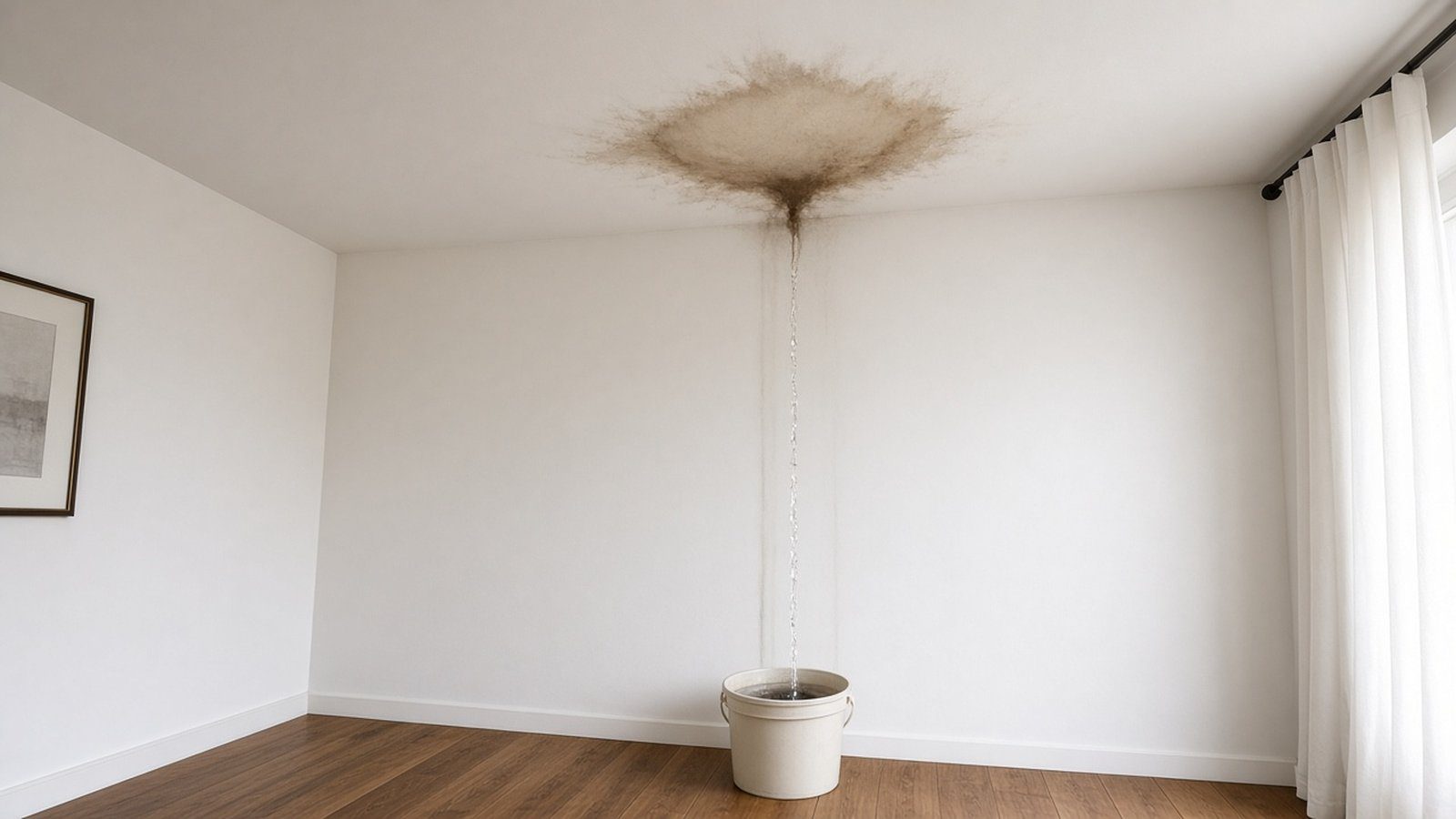
- Drain a bulging ceiling. A sagging bubble of drywall or plaster is holding water. Putting a bucket under it and making a small hole lets it drain in a controlled way instead of collapsing.
- Take photos and video. Capture the ceiling, the wet floor, the attic if you can safely reach it, and the outside from the ground.
Illustrative image
Why should you stay off the roof in winter?
Snow hides ice, skylights and soft spots. A wet or frosty shingle roof is slippery even for people who work on them every day. FEMA’s snow load guidance says roof snow removal is dangerous and should be done only by qualified people following safety protocols (FEMA P-957, PDF). The same goes for chasing a leak on a winter roof. Let the crew with fall protection handle the roof.
Illustrative image
What usually causes winter roof leaks in Racine?
Is it an ice dam?
If the leak shows up near an exterior wall or along the edge of a ceiling after a snowfall and a thaw, an ice dam is a likely suspect. Meltwater backs up behind a ridge of ice at the eaves and works under the shingles. Our post on ice dams in Racine covers causes and prevention.
Is it wind damage?
Strong wind off Lake Michigan can lift or tear shingles, especially along ridges and rakes. Look from the ground for missing shingles, exposed dark underlayment or shingle pieces in the yard.
Is it flashing or a vent boot?
A leak near a chimney, plumbing vent, bathroom fan or skylight often traces to cracked rubber boots or loose flashing. These are common repair items on older Racine homes.
Could it be attic condensation instead?
Sometimes “leaks” in winter are frost in the attic melting on a warm day. If you see water dripping from nail tips across a wide area, or frost on the underside of the decking, the cause may be warm, moist air getting into the attic. That calls for an air sealing and ventilation fix, not a shingle repair.
Get Your Free Estimate
Talk with a local Racine-area team that has been working on Southeast Wisconsin homes since 2009. We will look at your project and give you straight answers.
What does an emergency roof repair involve?
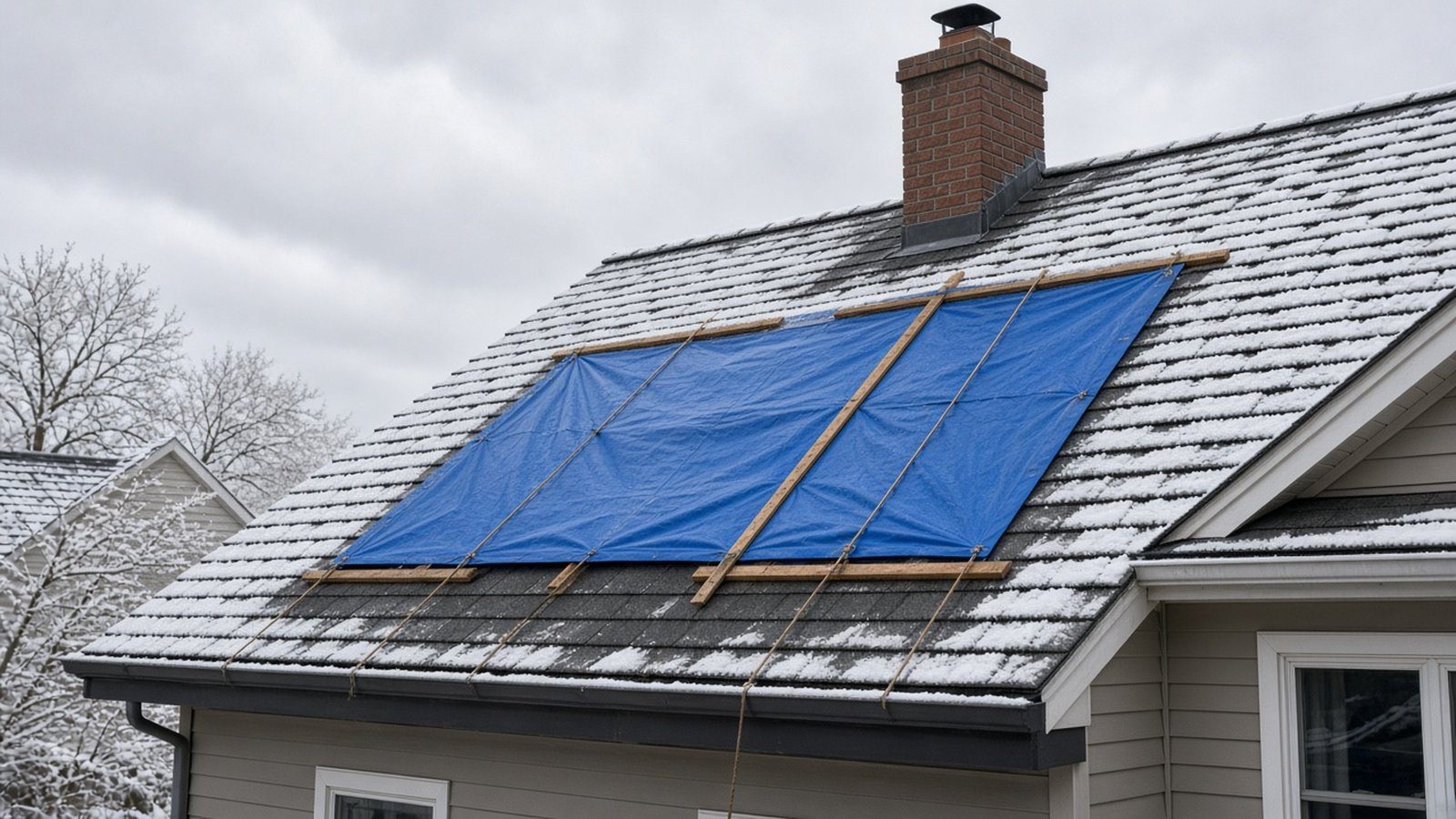
The first goal is to stop water from getting in. That may mean a tarp secured over the damaged area, a temporary patch, or resealing a failed boot or flashing. In very cold weather, some permanent repairs are harder because shingle sealant strips need warmth to bond. The Asphalt Roofing Manufacturers Association notes that in cold weather, shingles may need to be hand-sealed according to the manufacturer’s instructions (ARMA).
After the emergency is under control, a proper inspection identifies the source and whether a repair or replacement makes sense. Our roofing page lists Emergency Roofing Services with rapid response.
Should you call your insurance company?
If the leak came from a sudden event like wind or a fallen branch, it may be worth contacting your insurer. Coverage depends on your policy, and wear and tear is often treated differently from storm damage. The Wisconsin Office of the Commissioner of Insurance recommends documenting damage with photos before cleanup, keeping repair receipts, and not throwing away damaged items until the adjuster agrees (OCI storm guidance). Our storm damage and insurance claims guide walks through the claim process.
How can you prevent the next winter leak?
- Have the roof and flashing checked in fall, before the first heavy snow
- Clean gutters so meltwater can drain
- Rake snow off the lower roof after heavy snowfalls, from the ground
- Have the attic checked for air leaks, insulation and ventilation
Water coming in right now? Request emergency roofing service on our roofing page, call us at (262) 822-1231, or reach us through the contact page.
Frequently asked questions
What should I do first if my roof is leaking in winter?
Catch the water, move valuables, and stay safe around electricity. If a ceiling is bulging, put a bucket under it and make a small hole so it drains in a controlled way. Take photos, then call a roofer who handles emergency work.
Can a roof be repaired in freezing weather?
Temporary repairs like tarps and sealing failed flashing are often possible in winter. Some permanent shingle repairs are harder because the adhesive strips need warmth to bond, so shingles may need hand-sealing per the manufacturer’s instructions.
Why does my roof only leak when snow melts?
That pattern often points to an ice dam. Heat from the attic melts snow, the water refreezes at the eaves, and meltwater backs up under shingles. Frost melting in the attic can also look like a leak.
Should I get on my roof to clear snow during a leak?
No. Snow and ice make roofs very slippery, and FEMA says roof snow removal should be done only by qualified people following safety protocols. Leave work on the roof to a crew with proper fall protection.
Will insurance cover a winter roof leak?
It depends on your policy and the cause. Sudden damage, such as wind tearing off shingles, is handled differently from wear and tear. Document everything with photos, keep receipts for emergency repairs, and contact your insurer to ask.
Sources
- FEMA P-957, Snow Load Safety Guide: https://www.fema.gov/sites/default/files/2020-07/fema_snow_load_2014.pdf
- ARMA, cold weather shingle installation: https://www.asphaltroofing.org/recommendations-for-installation-of-asphalt-roofing-shingles-in-cold-weather/
- Wisconsin OCI, after-a-storm guidance (July 28, 2026): https://oci.wi.gov/Pages/PressReleases/20260728AfterAStormResponse.aspx
Related services and resources
Residential Roofing
Free roof inspections, repairs and full replacements.
Roof Replacement Calculator
Get a ballpark number before anyone climbs on your roof.
Service Areas
Racine, Kenosha and the surrounding communities we serve.
Homeowner Resources
More guides from the Axis team on roofs and remodeling.
Ready to talk about your project?
Free estimates, honest recommendations and a local crew. Request your estimate online or give us a call.