
There is no single inch count, because wet snow weighs far more than fluffy snow and roofs are built to different loads. Watch for warning signs instead: sagging, creaking or popping, doors that no longer open or close, cracks in walls, or severe leaks. If you rake snow, do it from the ground, never from the roof.
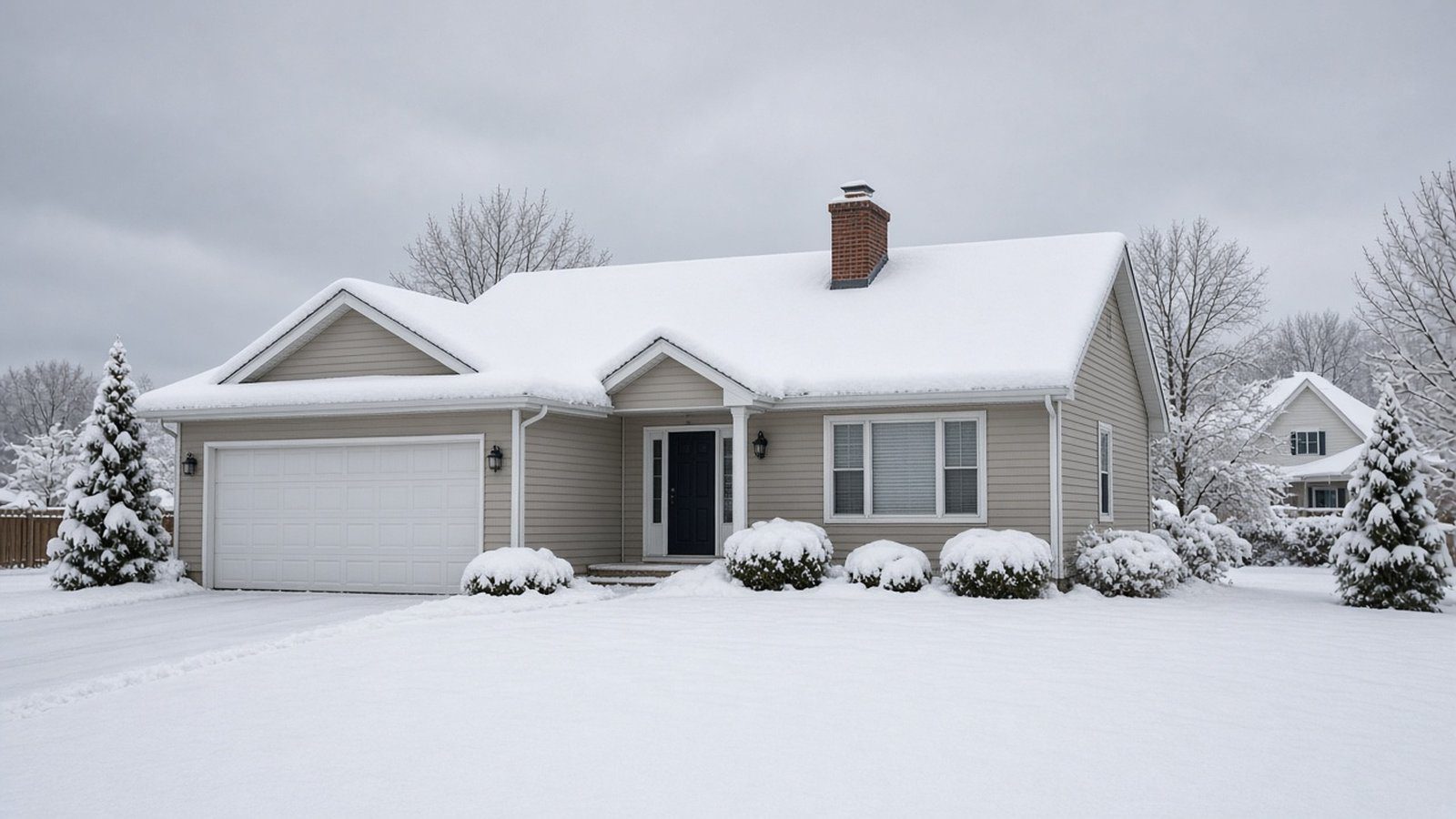
Most houses here handle a normal winter without trouble. Problems usually come from heavy, wet snow, drifting, rain on top of snow, or a roof that already has weak spots. Lakeshore neighborhoods can also get extra snow when wind blows off Lake Michigan.
Why can lakeshore homes get more snow?
Lake-effect snow forms when cold air moves over the relatively warm lake and picks up moisture. Wind direction decides who gets it. On January 6, 2025, the National Weather Service in Milwaukee documented a lake-effect event driven by north-northeast winds, with the strongest convergence over Racine and Kenosha Counties and totals of 2 to 5 inches there (NWS Milwaukee summary, PDF). These bands can be narrow, so one side of town can see much more than the other.
Illustrative image
Why does wet snow matter more than depth?
A foot of light, fluffy snow and a foot of wet, packed snow are very different loads. Rain falling on existing snow soaks in and adds weight without adding much depth. Drifts against walls, dormers and lower roofs next to taller ones can also pile far more snow in one area than you see elsewhere.
Wisconsin’s dwelling code requires roofs to be designed for the snow loads shown on the state’s zone map (Wis. Admin. Code SPS 321.02). Older homes, additions and porches built without permits may not meet that standard, and damage like rot can weaken any roof.
Illustrative image
What are the warning signs of too much snow on a roof?
FEMA’s snow load safety guide lists signs that a roof may be overloaded (FEMA P-957, PDF):
- Sagging ceilings or roof members
- Popping, cracking and creaking noises
- Doors or windows that can no longer be opened or closed
- Cracks in walls or masonry, or cracked or split wood members
- Severe roof leaks
FEMA’s guidance is clear: if you see these signs, the building should be promptly evacuated and a local building authority or qualified design professional should inspect it. Do not wait to see whether it gets worse.
Get Your Free Estimate
Talk with a local Racine-area team that has been working on Southeast Wisconsin homes since 2009. We will look at your project and give you straight answers.
How do you remove roof snow safely?
Should you use a roof rake from the ground?
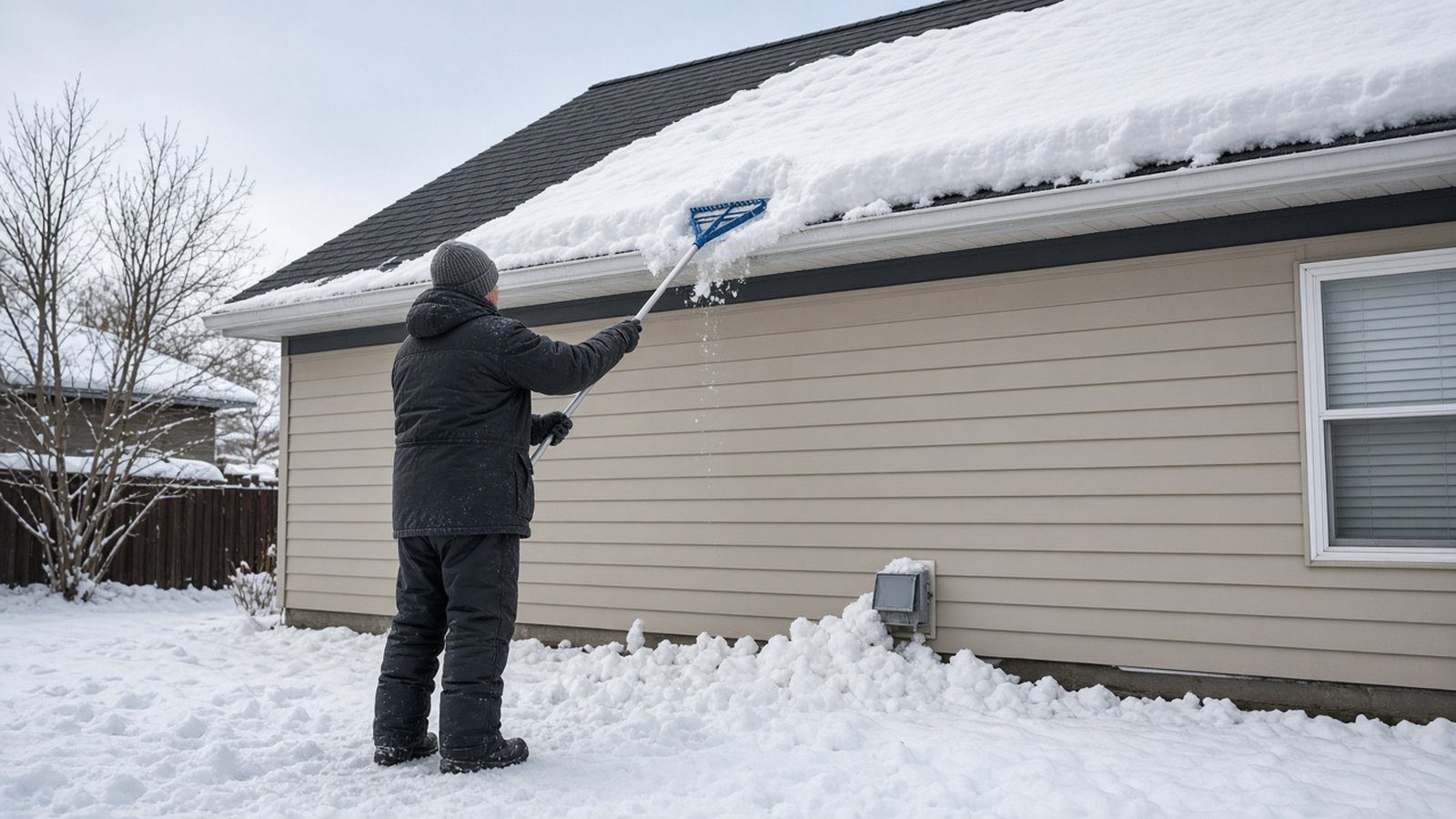
For most homeowners, a long-handled plastic roof rake used from the ground is the safest option. FEMA notes that a long-handled non-metal snow rake can be used in some cases and says to use plastic rather than metal tools. Pull snow off the lower few feet of the roof, which also helps limit ice dams at the eaves. FEMA also advises leaving a couple of inches of snow on the roof so the roof covering is not damaged.
Should you climb on the roof?
No. Snow hides ice, skylights and roof edges. FEMA calls roof snow removal a dangerous activity that should be done only by qualified people following safety protocols. If you are ever worried the roof could collapse, FEMA says to stop removal and get out of the building.
What should you avoid?
- Do not use metal shovels, picks or ice chippers on shingles
- Do not pile removed snow against the foundation or block exits and vents
- Watch for power lines, and stay clear of falling snow and ice
- Do not use open flames or heat guns to melt ice
Which parts of a house are most at risk?
- Porches and additions built later, sometimes to lighter standards
- Low-slope and flat roofs, which shed snow slowly
- Lower roofs next to taller walls, where drifts and sliding snow collect
- Older garages and carports
- Areas with known rot, often at valleys, eaves or around chimneys
Racine’s housing stock is older than many metros. The Roof Cost Index, citing Census data, reports a median build year of 1968 for the Racine-Mount Pleasant metro (Roof Cost Index). Older does not mean weak, but it does mean decades of repairs and additions that are worth a look.
When should you call a roofer about snow?
Call if you see any of the warning signs above, if water is coming in, or if ice dams keep forming. After a heavy winter, a spring inspection can catch damaged shingles, flashing and gutters. Our posts on ice dams and what to do about a winter roof leak cover related problems.
Our roofing page lists emergency roofing services. Not sure whether we serve your area? Check our service areas page or give us a call.
Worried about your roof this winter? Contact Axis through our residential roofing page or call (262) 822-1231.
Frequently asked questions
How many inches of snow can a roof hold?
There is no single number. Wet, heavy snow weighs much more than light snow, and roofs are built to different design loads. Watch for warning signs like sagging, creaking or doors that will not close instead of counting inches.
What are signs of too much snow on my roof?
FEMA lists sagging ceilings or roof members, popping or creaking sounds, doors or windows that can no longer open or close, cracks in walls and severe roof leaks. If you see these, FEMA says to evacuate promptly and have the building inspected.
Is it safe to shovel snow off my roof?
FEMA says roof snow removal is dangerous and should be done only by qualified people. For most homeowners, a plastic roof rake used from the ground on the lower part of the roof is the safer option. Leave rooftop work to crews with fall protection.
Why does Racine get lake-effect snow?
Cold air moving over Lake Michigan picks up moisture and drops it as snow downwind. On January 6, 2025, north-northeast winds produced lake-effect snow that the National Weather Service said converged most strongly over Racine and Kenosha Counties.
Does removing snow help prevent ice dams?
Raking snow off the lower few feet of the roof removes some of the snow that melts and refreezes at the eaves. The longer-term fix is sealing attic air leaks, adding insulation and keeping ventilation open.
Sources
- NWS Milwaukee, January 6, 2025 lake-effect snow summary: https://www.weather.gov/media/mkx/2025Jan6LakeEffectSnow.pdf
- FEMA P-957, Snow Load Safety Guide: https://www.fema.gov/sites/default/files/2020-07/fema_snow_load_2014.pdf
- Wisconsin Admin. Code ch. SPS 321: https://docs.legis.wisconsin.gov/code/admin_code/sps/safety_and_buildings_and_environment/320_325/321.pdf
- Roof Cost Index, Racine (housing age): https://roofcostindex.com/cost/wisconsin/racine/
Related services and resources
Residential Roofing
Free roof inspections, repairs and full replacements.
Roof Replacement Calculator
Get a ballpark number before anyone climbs on your roof.
Service Areas
Racine, Kenosha and the surrounding communities we serve.
Homeowner Resources
More guides from the Axis team on roofs and remodeling.
Ready to talk about your project?
Free estimates, honest recommendations and a local crew. Request your estimate online or give us a call.